
Eat Regularly Enough for You
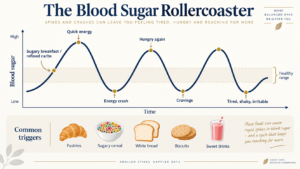
Long gaps without food followed by a very large meal can make appetite and energy harder to manage.
Some people do very well with three regular meals.
Others may benefit from a small balanced snack between meals.
Pay attention to your own body.
Try not to wait until you are absolutely starving before eating.
Being extremely hungry can make it much easier to:
- Eat very quickly
- Overeat
- Reach for sugary foods
- Make less balanced food choices

Start With Breakfast
For many people, a balanced breakfast can help support energy and appetite during the morning.
Try to include protein and fibre.
Examples include:
- Eggs with vegetables and wholegrain toast
- Porridge with berries, seeds and nuts
- Natural yoghurt with berries and seeds
- Homemade breakfast muffins containing eggs, vegetables or nuts
- Overnight oats with seeds and yoghurt
Move After Meals
Your muscles can use glucose for energy.
Even gentle movement after eating can help.
Try a 10–15 minute walk after a meal.
You do not need a strenuous workout.
Walking, gardening or simply getting up and moving can all be useful.
Sleep and Stress Matter Too
Food is only one part of blood sugar balance.
Poor sleep can affect:
- Appetite
- Food cravings
- Energy levels
- Insulin sensitivity
Long-term stress can also affect appetite, sleep and food choices.
Supporting blood sugar therefore means looking after the whole person.
Useful Blood Tests
You may hear your doctor mention:
Fasting Glucose
This gives a snapshot of your blood glucose after fasting.
HbA1c
HbA1c gives an indication of your average blood glucose over approximately the previous two to three months.
Triglycerides
Raised triglycerides may sometimes occur alongside insulin resistance and metabolic fatty liver.
Liver Enzymes
Blood tests such as:
- ALT
- AST
- GGT
may be checked when liver health is being investigated.
Blood results should always be interpreted alongside your medical history, symptoms and other test results.
Your 5-Step Blood Sugar Reset
Try these five simple actions for one week:
- Add a clear source of protein to breakfast.
- Include vegetables or another fibre-rich food at lunch and dinner.
- Pair snacks rather than eating quick carbohydrate on its own.
- Take a gentle walk after one meal each day.
- Notice your energy, hunger and cravings.
You are gathering information about your body — not trying to be perfect.
Take-Home Message
Blood sugar balance is not about avoiding every rise in glucose.
It is about giving your body a steadier supply of fuel so that glucose, insulin and the liver can work together effectively.
Remember:
Protein + fibre + healthy fats can help create a more balanced meal.
Choose better-quality carbohydrates rather than fearing carbohydrate.
Movement helps your muscles use glucose.
Sleep and stress matter too.
Small changes made consistently can support both blood sugar and liver health.
