
Balance Blood Sugar
Learn How Glucose, Insulin and the Liver Work Together
Steadier blood sugar can support your energy, appetite, metabolic health and liver health.
Think of your liver as your body’s energy bank.
After you eat, glucose enters the bloodstream. Insulin helps move that glucose into your cells for energy, while the liver stores some glucose for later and releases it again when blood sugar begins to fall.
What Is Glucose?
Glucose is a type of sugar that your body uses for energy.
Carbohydrate foods are broken down during digestion into glucose.
Glucose is particularly important for:
- The brain
- Muscles
- Everyday movement
- Energy production
After a meal containing carbohydrate, glucose moves from the digestive system into the bloodstream.
This is completely normal.
The goal is not to prevent blood sugar from rising. The aim is to help the body manage that rise effectively.
What Does Insulin Do?
When blood glucose rises, the pancreas releases a hormone called insulin.
You can think of insulin as a key.
It helps glucose move out of the bloodstream and into the body’s cells, where it can be used for energy.
Insulin also signals to the liver that energy is available and that some glucose can be stored for later.
What Does the Liver Do?
The liver plays a central role in keeping blood sugar balanced.
After eating, the liver can take some glucose from the bloodstream and store it as glycogen.
Glycogen is stored energy.
Between meals and during the night, blood glucose naturally begins to fall.
The liver can then release some of its stored glucose back into the bloodstream.
This helps maintain a steady supply of energy even when we are not eating.
So the liver is constantly responding to the body’s needs:
After eating → store glucose
Between meals → release glucose
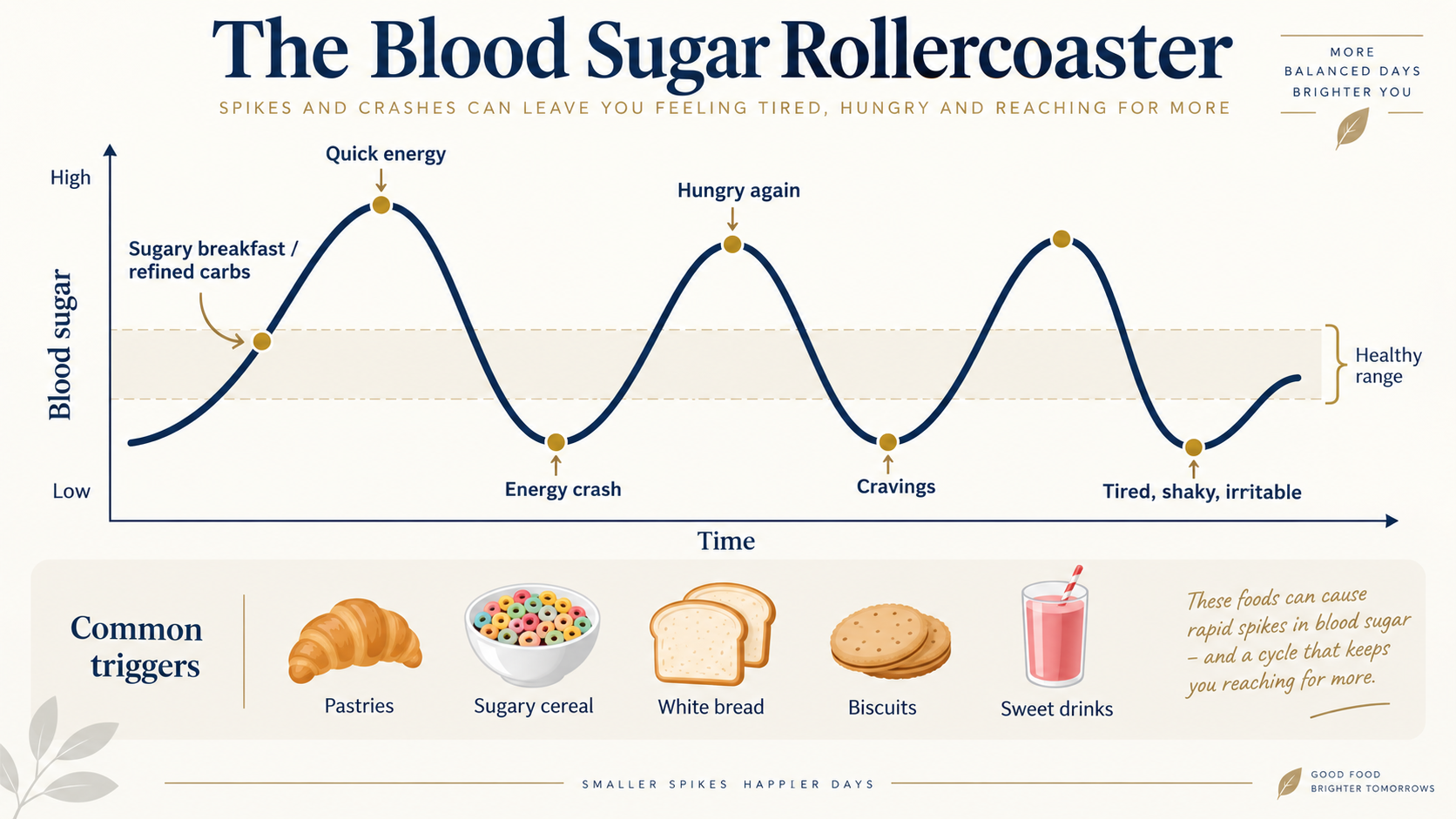
The Blood Sugar Rollercoaster
Some meals and snacks are digested very quickly.
Foods that are high in added sugar or refined carbohydrate can cause blood glucose to rise quickly, particularly when they are eaten on their own.
Examples include:
- Sugary cereals
- Pastries
- Biscuits
- Sweets
- White bread
- Sugary drinks
The body responds by releasing insulin.
Insulin helps bring blood glucose back down.
Sometimes a rapid rise can be followed by a noticeable dip.
You might then feel:
- Tired
- Hungry again quickly
- Irritable
- Shaky
- Low in energy
- Unable to concentrate
- Strong cravings for something sweet
These symptoms do not automatically mean that someone has a blood sugar disorder.
They can, however, be useful clues that it may be time to look at meal balance, food choices and meal timing.
Why Do We Reach for More Sugar?
When energy drops, it is very natural to want something that will give us energy quickly.
You may reach for:
- Chocolate
- Biscuits
- Coffee and something sweet
- Sugary drinks
- Pastries
Blood sugar rises again.
Energy improves briefly.
Then another dip may follow.
This can create the familiar blood sugar rollercoaster of:
Spike → energy boost → crash → hunger → cravings → another spike
The aim is not to achieve a perfectly flat blood sugar line.
Instead, we want gentler rises and falls.
